

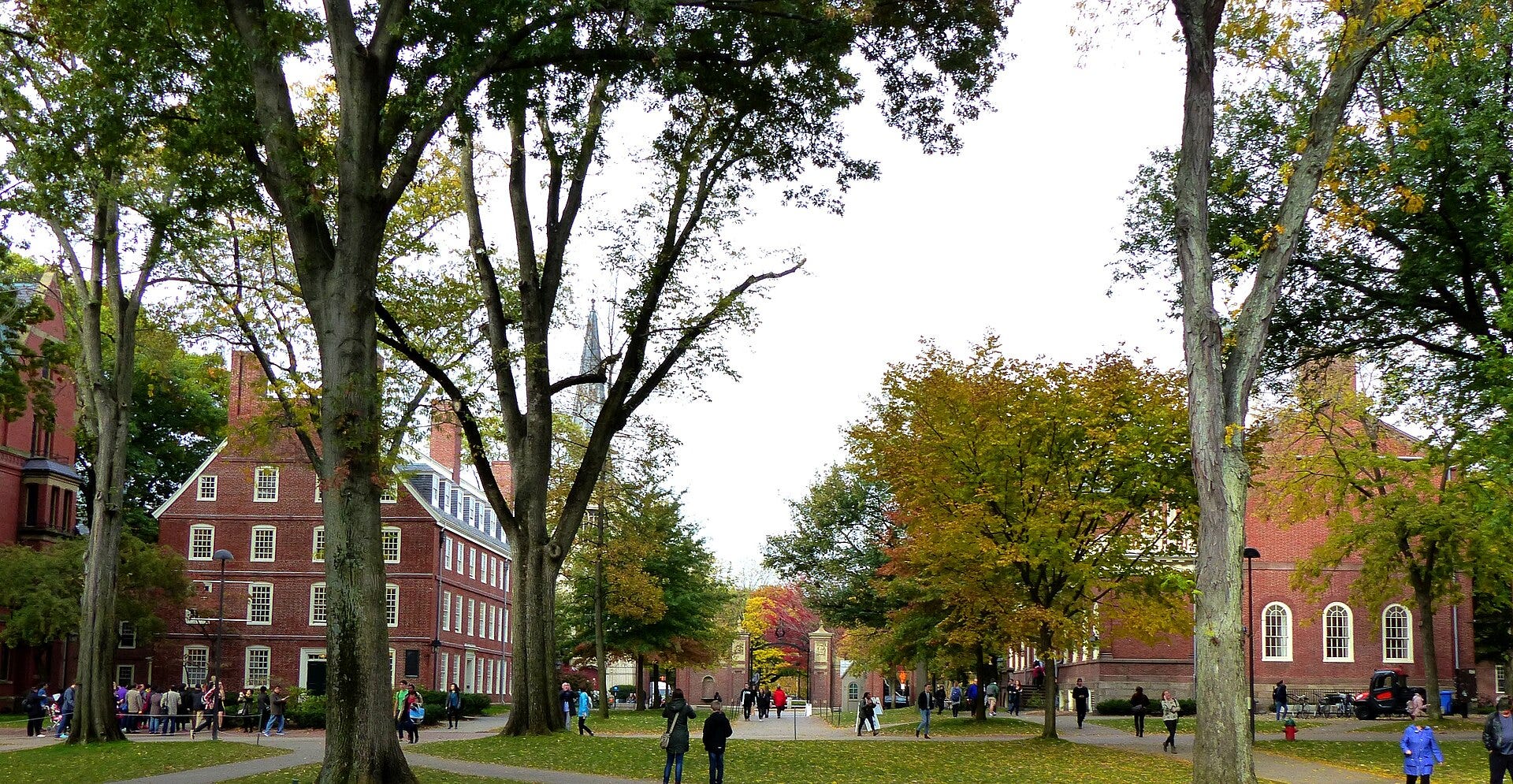
This academic year, Harvard University has found itself at the center of a number of contentious conversations. In addition to debates on the credibility of higher education and what American institutions owe to the American people is a more mundane matter: the meaning and function of our grades.
In October, Dean of Undergraduate Education Amanda Claybaugh released a 25-page report to faculty and students documenting the pervasive, pernicious rot of grade inflation on Harvard’s campus. She noted that more than 60 percent of undergraduates grades’ were A’s, compared to roughly a quarter two decades ago, and warned that the current circumstances risked “damaging the academic culture of the College.”
In response, a faculty committee has now released a 19-page proposal that would sharply limit A grades in undergraduate courses, capping them at 20 percent (+4 for small, seminar-style classes) and introduce a new internal percentile-ranking metric to determine awards and honors. The proposal, subject to a forthcoming full vote by the Faculty of Arts and Sciences, has inspired starkly divergent reactions across campus. Some faculty voices acknowledge the reforms as necessary, while students described even the initial report as “soul-crushing.”
The Salient is unabashedly pro-rigor. Harvard has an obvious and absurd grade inflation problem. This symposium includes three undergraduate perspectives on a question Harvard can no longer avoid: whether the College will restore meaningful academic standards or continue its aversion toward measurable excellence.
Rigor is Earned, Not Engineered
Contributed by J.M.
Harvard’s recent proposal of a 20% cap on A-grades recognizes a serious problem. Harvard’s grade inflation has run amok. The situation has become so extreme that Harvard’s recruiters now even advertise grade inflation as a perk of going to Harvard. Clearly, something must be done to bring back rigor. That Harvard is even considering an unpopular policy like this is commendable.
But good intentions do not substitute for good policy. Princeton learned this lesson when they attempted to impose a similar policy in 2004. What Princeton found was that the policy was supported neither by undergraduates nor the teaching assistants who graded them. As a result, both groups undermined the policy. Students took whatever courses they could to avoid the cap, whether or not those classes were educational, rigorous, or interesting. Teaching assistants started changing grades arbitrarily, randomly altering grades in order to comply with a policy which they did not support or even understand. Indeed, by the time Princeton removed the policy, the number of A grades was hardly lower than it had been prior to the policy change.
The way to solve grade inflation is not through heavy-handed social engineering but rather by directly increasing standards. Indeed, analysis has shown that departmental actions to increase rigor, not bureaucratic policies, is what eventually stemmed grade inflation in the 2000s at Princeton.
What we thus need is a serious attempt by our administrators to coordinate an increase in rigor across departments. Harvard should be a school where most students do not get an A because our courses are so challenging that students are pushed so hard that they find it genuinely difficult to achieve one. This sort of policy would require administrators to reflect further on the purpose of a university, and how Harvard has, in recent years, fallen short of that purpose. Therefore, it is unsurprising that the College’s b-suite has favored a shallow coat of paint over our serious academic problems.
A’s, At Last, for the Exceptional
Contributed by M.H.
According to a recent poll by the Harvard Undergraduate Association, almost 85 percent of Harvard undergraduates object to the recently proposed changes to Harvard grading, the work of a faculty task force organized by Dean of Undergraduate Education Amanda Claybaugh. Among undergraduates, the statistic seems even higher. In the fall, when Dean Claybaugh’s report on grade inflation debuted without any solutions, the lament was loud. Now, it’s deafening. Some students may be left wondering who composes this mythical minority.
I am a member of that rare 15 percent. I believe that the outlined cap on A grades—which proposes to limit the numbers of As that can be given within a class to 20 percent of its students plus an additional four, to adjust for small seminars—will have a positive impact on the most important element of a liberal arts education: the pursuit of academic excellence.
Harvard is not a normal institution of higher education. When a student leaves the Square and walks through Dexter Gate for the first time, they make a vow to “grow in wisdom” and leave mediocrity behind them; you enter a world of greatness and thus, promise to earn one’s place within that world. This is the ideal all Harvard students should work toward, but right now, there is no way to achieve greatness—a metric only made meaningful by distinction—in a class and be recognized for it.
The cap on A grades will reward the efforts of students who strive for excellence. After all, everyone can achieve mastery. It is only a matter of gruntwork, a million Quizlets, a dozen office hours—but greatness is a rare quality. If Harvard caps As, we will recognize and remunerate genius, encourage innovation, and refine our academic calculus to actually acknowledge academic brilliance.
Cap Chaos, Too
Contributed by C.C.
Harvard’s new grading policy proposal is a welcome step toward curbing grade inflation at Harvard. But if the committee is serious about restoring “meaningful indicators” of students’ relative performance, it must address another problem: divergent course load difficulty.
Not all Harvard classes are as hard as they should be, and the decision of what to study (or just what seminars to take) can significantly impact one’s GPA. The shift toward specialization in the academy has created more than significant variability in students’ schedules. Recent Q guide data showed a 300% workload gap between concentrations: this means significant variability in rigor, and a profound problem (an injustice) in the College. It is absurd that a STEM student at the same level of proficiency in their field as a humanities scholar can graduate the College with a completely different metric of excellence and achievement.
The grading policy proposal attempts to control for class difficulty using the +4 model, which favors small classes, but the correlation between class size and difficulty is imperfect. There are plenty of easy seminars in small departments that naturally require small classes, and there are plenty of difficult lecture courses.
To achieve the goal of decreasing grade inflation, Harvard needs to standardize the student experience through a core curriculum. Beyond resisting specialization and restoring the liberal arts model, a shared syllabi of courses would provide an objective standard upon which students can compete and be measured, as classes would be taught with the same curricula and graded according to the same rubrics and set of expectations.
I’m shocked - shocked! - that most students want higher grades that they don’t have to earn.
Ignore them.
Punish those who attempt to skirt the new standards.
None of this is actually complicated. It simply requires stout fortitude and iron will.