

Many Americans have an all-or-nothing conception of our nation’s merit. In common arguments between left and right, the phrase “greatest country in the world” is thrown around loosely and is normally related to some unmeasurable attribute. Perhaps it is the land of the freest or the home of the bravest, but it is challenging and perhaps impossible to accurately compare these characteristics with other countries.
Even when studies attempt to measure freedom, though, they often appear unfavorable to the conservative argument. For instance, the Human Freedom Index in 2025 ranked the US the 15th freest nation globally. In response, many will argue that these studies are biased or rigged against the US. That may be; it is certainly possible that there is institutional prejudice against positive conceptions of America. And debates over these metrics are noble and necessary. However, by obsessing over these metrics, conservatives implicitly concede that love for the nation must be continually justified by empirical evidence.
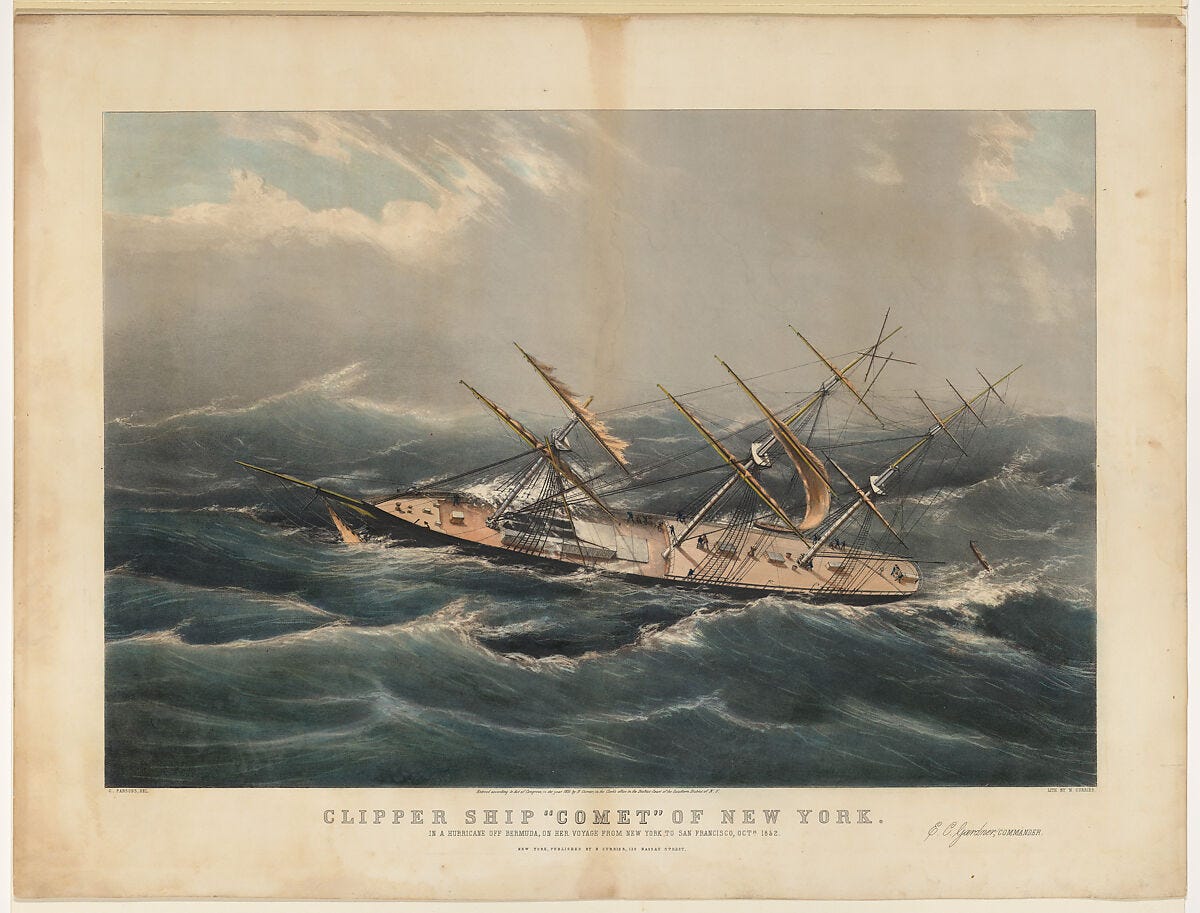
Suppose a ship is sinking. The captain calls his officers. Maybe someone plays a trumpet or tolls a bell to alert the crew. A plan of action is laid out to patch the hole; many run to grab buckets and begin scooping water out from the breach. But one man stands up and declares, boldly, defensively, that the ship is not, in fact, sinking. The surrounding crew would rightfully call this man insane.
The man loves the ship, so he wants to guard it from slander. Yet, in protecting it, he blinds himself to the situation at hand. He believes that, in order to maintain his love, the object of that love must be flawless. He attempts to make his love verifiable and provable. Yet, by forcing his love to be fully justified by evidence, he disconnects himself from reality. He may be a loving madman, but, even still, he will be made to walk the plank. Taken seriously, he damns what he professes to love. Rather, it is those who remain grounded in reality, those who recognize its problems and set out to fix them, who save the ship.
There are others still who see the holes, but do not try to save the ship. Instead, they pry apart the leaking boards of the hull and hammer crude lifeboats out of them, hopping on these makeshift constructions to safety on the nearest island. Because they believe the ship is doomed, there is no need to try to save it. Notice that such abandonment need not be spatial. One does not have to leave this country to neglect it. This mistreatment more often takes the form of the dismantling of institutions, of burning things to the ground. Such a process cannot have love because it seeks to eliminate its beloved. Alternatively, some do nothing at all, neither jumping ship nor fixing the problem. Contrary to the Madman’s love, disillusionment marks this group. The dismantler and the disillusioned merge to form the Coward, the man who sees reality but does nothing to save the ship.
Patriotism is not this way. The Patriot sees and acts rightly. It is not unpatriotic to recognize the problems in the object of one’s love; it is the only possible way to do what is best for the country.
There are three types of people on this sinking ship: The Madman, who demands an untenable rational basis for his love, and therefore falsifies the world around him; the Coward, who recognizes reality and abandons ship; and finally, the Patriot, who stays and fights for that which he loves. The first two, though opposites, are left with similar lots (that is, with no ship). But the Patriot, through his recognition of reality and initiative, embodies a love that is vital for the survival of the ship.
Floating is what keeps a boat valuable; love is what keeps things afloat. Rather than the country having to be worthy of love, love is the very thing that makes it worthy. Patriotism should not have to be won, any more than a child should have to win the heart of a parent. Rather, love for country should grip one as when a mother first sees her baby: inexplicable, unmerited, helpless.