

The most dangerous person in the modern world economy is a twenty-something year-old graduate with a prestigious degree and a polished slide deck. At Harvard, we treat entry-level offers at top-tier consulting firms as secular sacraments. We build skills specifically to facilitate change, but this change is always characterized by top-down administrative exercises that value the aesthetics of competence over the infrastructure of reality.
Nowhere is this more true than among “charitable” students seeking to go into government and nonprofit work. When friends speak about their “passion” for “helping developing nations” and the impact they intend to make, they are usually sincere. They are also usually wrong. The impact will be real, but it will probably be negative. We have been trained to see the world as a series of administrative hurdles rather than a physical reality that requires a grounded bottom-up approach that knows how and why actual systems work.
In his 2006 book The White Man’s Burden, William Easterly identifies this as the fatal flaw of the planner. Easterly defines the planner as someone who believes he already knows the answer to poverty. He or she thinks of poverty as a technical engineering problem that his answers will solve, no matter what short-term resistance he or she may face. The Searcher, by contrast, accepts that the world is too complex for a single blueprint, instead finding local solutions connected to civil society through trial and error.1 Because our university culture prioritizes the hubris of planning over the humility of searching, our leadership class is defined by its inability to understand reality.
To fully understand the failings of the Planner mindset, we can think of the personification of the Planner, the McKinsey-vetted technocrat who treats the complex machinery of a nation like a high-school debate prompt. He begins his career at a firm where the primary product is the illusion of certainty and competence through presentations and Excel models. While at McKinsey, this archetype, whose closest analogue is Pete Buttigieg, is trained in the language and doctrines of Planner-logic: massive, top down theoretical frameworks that fail to account for or even attempt at the grit of implementation. When this mindset is applied to national infrastructure, it manifests as a complete inability to distinguish between administrative motion and physical progress.
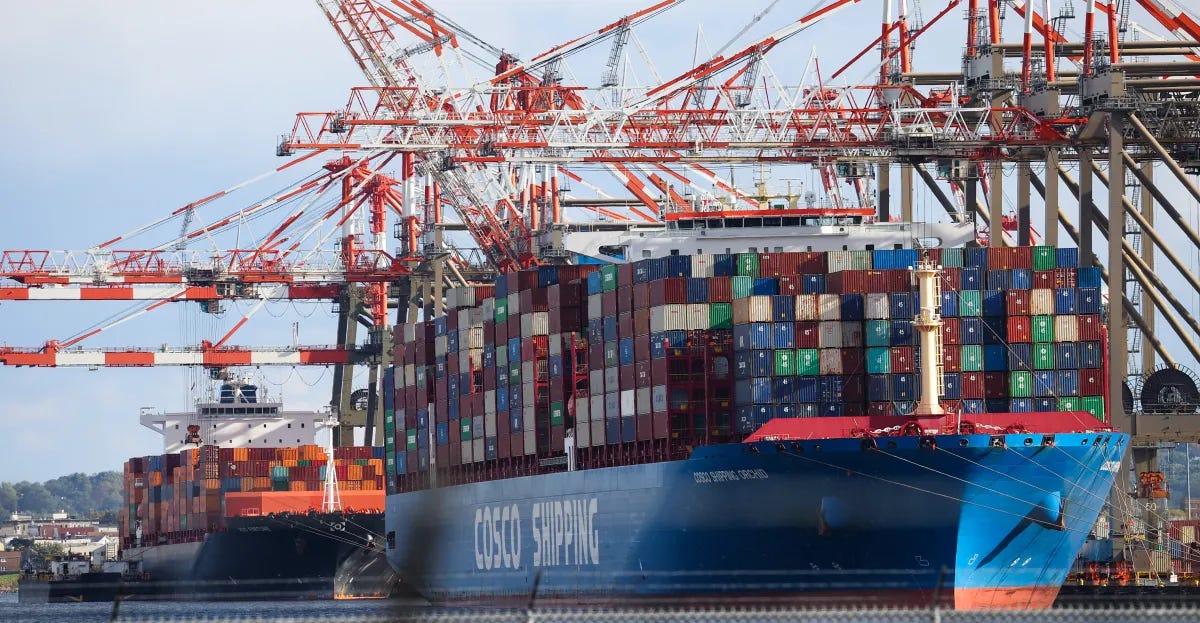
We saw the true cost of this during the Supply Chain Crisis of 2021 and 2022. This crisis fell directly under the purview of federal Transportation leadership, controlled by the archetypal Planner. While record numbers of container ships idled off the coast of California, industry leaders and shippers openly requested suspending antiquated zoning laws and an immediate transition to 24/7 port operations to clear the backlog. The administrative response, however, was to convene task forces and announce a Port Envoy. As Easterly notes, Planners like Buttigieg announce good intentions but provide motivated Searchers with no incentives to implement them.2 This is because Planners believe that convening is equivalent to action.
Because our leadership prioritized administrative oversight over getting things done, the cost of shipping a container from Asia to the US West Coast spiked from \$2,000 to over$20,000.3 This port inaction was a primary engine of the 9.1% inflation spike that gutted the purchasing power of American families. The Searcher understands that if the ship is not at the dock, the economy is dying. The Planner, on the other hand, believes that if he has announced a “strategic framework,” the problem will recognize his ingenuity and go away on its own.
But Buttigieg looks like a success relative to when charitable Planners try to “help” emerging markets. The World Bank initiative Scaling Solar shows just how bad Planner hubris can become, Zambia implemented a record low tariff on energy through hidden subsidies and donor-funded loans. When the Planners set an artificial 6-cent benchmark for what tariffs ought to be, however, they effectively broke the local credit market. African governments cancelled their previous trade deals because they were told by the “experts” that 6-cents was the new market reality. But that price was impossible without inherently short-term support. After a decade of administrative delay, Zambia has managed to produce less than a sixth of its promised energy. Influenced by the Planners, Ethiopia mandated 500 Megawatts of energy to its people in 2019 but has since failed to produce even a single watt.4
The Planners did not scale the market but strangled it by making real-world risk look like a failure of management rather than a fact of life. Planners’ “charitable efforts” failed because they were reductionist by nature, assuming that a single price-point is a marker of success while ignoring the rational risk-perception of the nation. By stripping away sovereign nations’ ability to negotiate and build independently, Planners also took away their knowledge of those risks.
The alternative is Industrial Sovereignty through the logic of the Searcher. The proof is Mauritius. In 1961, Nobel Prize-winning economist James Meade, the quintessential Planner, dismissed Mauritius, predicting that its reliance on sugar and overpopulation would lead to economic ruin.5 If Mauritius had followed the standard “Plan” handed down by Ivy League academics, it would have remained a stagnant mono-crop economy dependent on British handouts. Instead, Mauritius was governed by Searchers. Mauritius’ leaders rejected the orthodox shock therapy often prescribed by the IMF, choosing instead a “dual-track” strategy that protected local institutions while aggressively building Export Processing Zones (EPZs) to compete globally.6
Instead of begging for experts to manage their transition, Mauritius leveraged its most critical asset: Institutional Sovereignty. They ignored external calls for rapid currency devaluation and welfare cuts that would have shattered their delicate ethnic social compact. By maintaining high-quality local bureaucracies and fostering a unique partnership between the state and local capital, Mauritius transformed from a sugar-dependent island into a diversified, high-income economy with a thriving textile, finance, and tourism base. Between 1977 and 2010, the Mauritian economy grew at an average of 5% per year, consistently outperforming the “Planned” economies of mainland Africa. Mauritius is the refutation of the woke man’s burden.7 They did not wait for a top-down master plan; they formed the internal capital and political stability required to ignore the Planners entirely. This is what true leadership looks like: recognizing a nation’s internal assets rather than asking for external aid.
Real leadership is about respecting people enough to let them take their own sovereignty, not dictating their decisions from an ivory tower. The students at this university are being trained to be tools of a stagnant bureaucracy. We are being taught to value the model over the street and the slide deck over the ledger. As leaders, we need to leave our hotel rooms and talk to the people actually doing real work. Only then will we learn how to stop “helping” and start building. We need to ground ourselves in reality or get out of the way.
William Easterly, The White Man’s Burden: Why the West’s Efforts to Aid the Rest Have Done So Much Ill and So Little Good (New York: Penguin Press, 2006), p. 5.
Easterly, The White Man’s Burden, p. 6.
Freightos Baltic Index (FBX), “Global Container Freight Rate Trends,” 2021-2022.
Scaling Solar, Active Engagements: Ethiopia and Madagascar Status Reports, 2024-2026.
James Meade, The Economic and Social Structure of Mauritius (London: Methuen, 1961).
Arvind Subramanian and Devesh Roy, “Who Can Explain the Mauritian Miracle? Meade, Romer, Sachs, or Rodrik?” in In Search of Prosperity: Analytic Narratives on Economic Growth, ed. Dani Rodrik (Princeton: Princeton University Press, 2003), pp. 205-243.
Jeffrey Frankel, “Mauritius: African Success Story,” NBER Working Paper No. 16569, December 2010.
I enjoyed this article, thank you. While in Boston recently and passing the scores of colleges and universities across the city, I found myself thinking about two neighboring institutions that once occupied very different positions in higher education: Harvard University and Northeastern University.
Today, both appear on many “hardest to get into” lists, yet over the past twenty years the public perception of the two schools has shifted in notably different directions. Harvard, despite remaining one of the world’s most prestigious universities, increasingly faces criticism that it has become disconnected from the practical realities facing students and employers. Meanwhile, Northeastern — once viewed as a far less prominent regional institution — is thriving, expanding strategically, and gaining momentum nationally.
How did this happen?
In many ways, Northeastern built a business model centered on delivering something employers increasingly value: graduates with meaningful real-world experience and a higher likelihood of workplace readiness and success. Its cooperative education model, employer partnerships, and emphasis on experiential learning anticipated where higher education and the labor market were heading. Students graduate not only with academic credentials, but often with a résumé that already includes substantial professional experience.
My impression is that Harvard, by contrast, long viewed itself as above this more “working class” or vocational orientation. For generations, the institution could rely on prestige alone. The Harvard name itself opened doors, regardless of whether students graduated with direct workplace experience or applied skills. But in a changing world — where tuition costs have exploded, technology is reshaping industries, and families increasingly demand measurable returns on investment — prestige alone may no longer feel sufficient.
The result is an interesting reversal in perception. One institution protected tradition and elite intellectual status; the other embraced evolution, market demand, and practical preparation. Increasingly, students and parents appear to value a combination of academic quality and tangible career readiness — and universities like Northeastern recognized that shift earlier than many of their more established peers.
Loved this one! Resonates very strongly! Great Piece!
The irony of the whole "woke thing" is that the "woke" are not awake at all. A better word would be "deadened." They are "deadened" by the straight jacket of the Planners.
This may be why it is called the "Zombie Apocalypse." The half dead Zombies, straight-jacketed by the Planners, go completely crazy and start killing people!